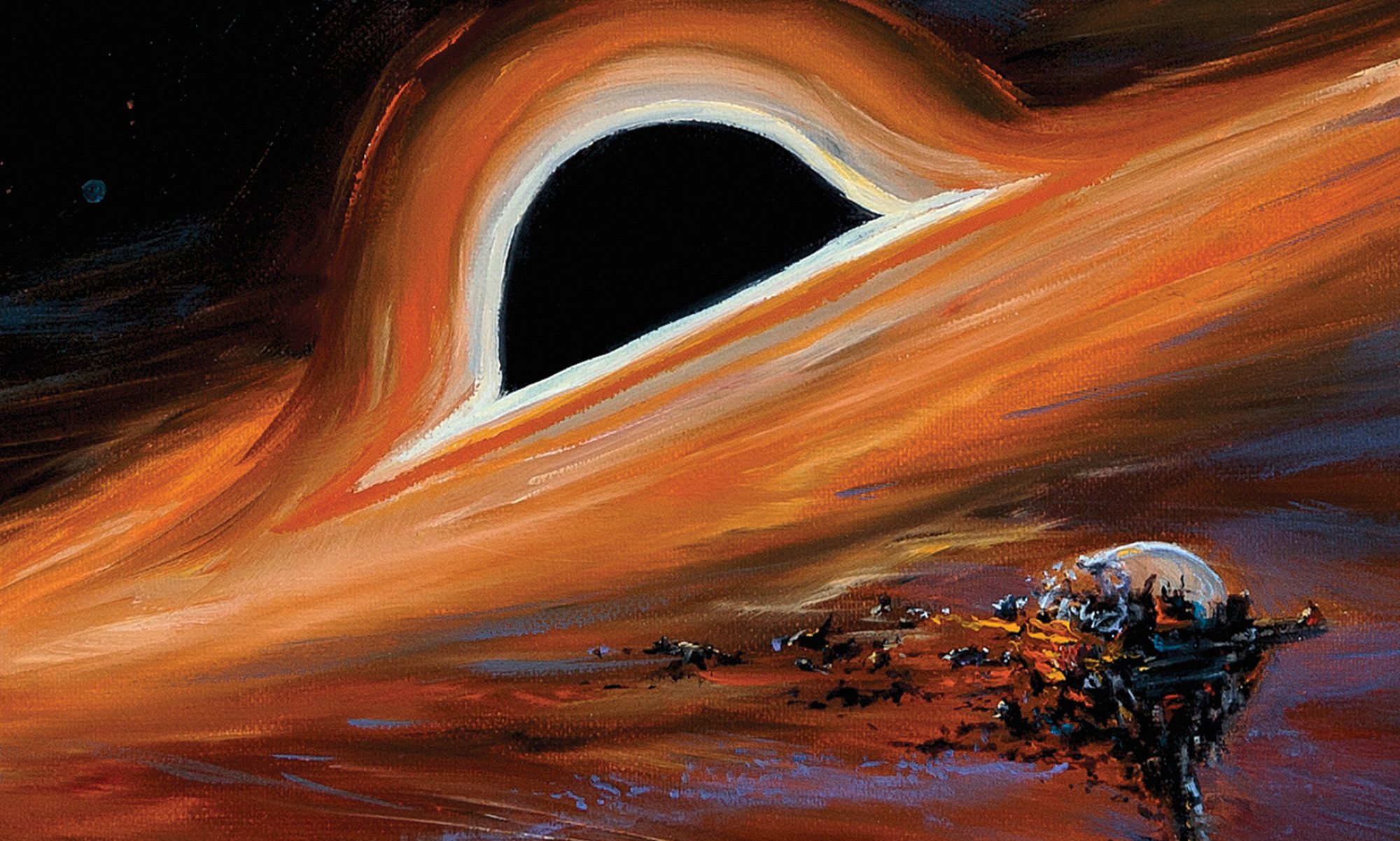
Yes, I’m finally confident enough that it’s ready to throw a date out there: Oct. 1st. A surge of pre-orders on Amazon obviously helps sales after release day, so please consider hitting that button.
Not sure what you’re getting? Check out the preview link above.
I plan to keep it exclusive to the Zon for the first three months, then put it out on the other distributors (Apple, B&N, Kobo, Google Play). Sales have been pretty dismal with those outlets in the past, but now that I’ll have more than one book out there it’ll be interesting to see if that changes.
I can now say that whole “Second Novel Curse” thing is for realz, ya’ll. It defies explanation – for if I could that would mean that I understood it and could thus avoid the whole problem – but one would think after all of the work that goes into finishing a first novel, it would be no big deal to finish the second one…right?
Right?
Ha. HA. BWAHAHAHAHAHAHAHAHAAAAA!
Silly human. Don’t you realize that your brain immediately purges itself at the end of the creative process, leaving you a state of near-helplessness not experienced since your infancy (but without the wet diapers and boobies)?
Other writers warned me that the first novel seems to arrive almost fully-formed in your mind; your task as an author is to figure out how to tell the story. It’s all there bursting to get out and just waiting on you to prepare the way. The second novel is the reverse: now that you know how to do it, you have to scratch and claw your way to actually finding the story you want to tell in the first place.
There’s a difference between what happens in a story and what the thing’s actually about. I’m not afraid to say that every step in this process has been a struggle for a number of reasons. Some were of my own doing, many were not. Some were due to the fact that I have teenagers at home who needed more attention than I could have given if I’d instead devoted that energy to finishing this book two years ago. I can always write more but those boys will only grow up once. The world already has enough unprincipled yahoos in it, ya’ll don’t want me letting a couple more loose.
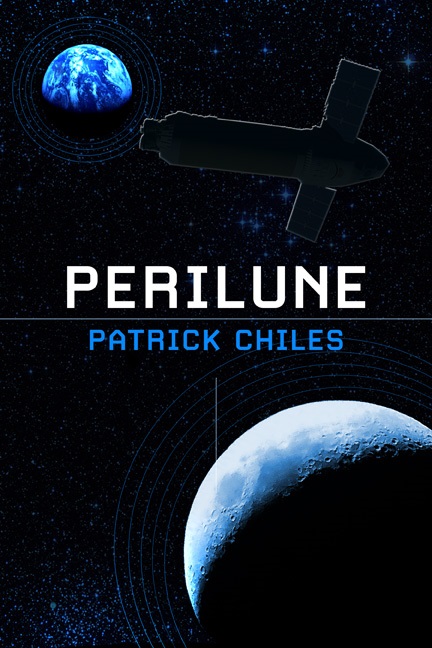
Just deciding on the title was a struggle, and in this case one where time was on my side. Back when I thought this would be ready in 2013, the title I’d planned on ended up being used by a much better-known author. While not necessarily subject to copyright, to me it seemed like very bad form to use the same title. Fortunately, enough time has passed that I’m now comfortable with it again.
So yes, the Perigee sequel is actually complete. Not “finished,” mind you, just “complete.” That means I’m in the midst of polishing the manuscript before sending it off for editing and book formatting. This is the fun part, too: things like settling on a title and finalizing cover art are good at providing a much-needed kick in the @$$.
FARSIDE will be available soon for pre-order on Amazon.
Don Abbot had never been one to hide his emotions well; that he had been able to rise this far within the Administration was widely seen as a testament to his technical abilities and organizational acumen. That it had just as much to do with his knowledge of whose skeletons were hidden in which closets was not as widely known.
As the President and her cabinet filed out of the situation room, Abbot conspicuously remained seated. Tapping his pen against the table, his tense posture and pursed lips broadcast to anyone who bothered to notice exactly how much he was stewing over this latest development.
“Don, you really have to learn to keep that stuff under wraps.”
Abbot looked up to find Defense Secretary Horner lingering by the doorway. He tossed his pen onto the table and pushed himself away. “What’s your point, Hal?” he sighed, knowing full well what the old man meant. “I hardly got a word in edgewise – not that anyone seemed interested in anything I had to say.”
“That, my friend, is the point,” the Secretary said as he pulled up a chair and grabbed the pen Abbot had been tapping away with. “You don’t play poker, do you?”
“Never had the patience for it,” Abbot admitted. “I didn’t care to digest the rules: which hand beats which, et cetera.” Though the few hands he’d played had taught him it was remarkably easy to bluff when you really didn’t know what you were doing.
“Yet you literally wrote the book on spacecraft design,” Horner pointed out. “You’re damn near a genius, Don.”
Near? Abbot thought to himself, realizing too late that he’d just been baited to prove a point.
“See?” Horner smiled. “I just insulted you. The look on your face gave it away. Don’t be so prickly. This is one time the President needs everyone to set aside their personal agendas and do what’s necessary for the mission.”
“What ‘personal agenda’ would you be referring to?” Abbot asked defensively. Was Hal really that gung-ho idealistic? If so, it was an easy way for a man to get rolled in this town.
“Art Hammond,” Horner said flatly. “Maybe I’m more attuned to past history than the others because I bought his planes, but everyone’s clued in to the fact that he’s been peeling away people from your agency for years. It happens, Don. That’s business. Don’t let yourself get so pissed off over it. At least don’t wear it on your sleeve.”
Abbot smiled thinly. The old guy almost understood, if not quite fully. This wasn’t “just business.” Abbot didn’t care so much about the people: they could be replaced, in fact he’d found organizational control to be much easier when there was a steady churn among the middle managers. The really motivated ones tended to have agendas that didn’t mesh with his own; it was best to keep them off-balance.
What had really frosted Don Abbot was the collapse of their human spaceflight program. Having risen through the ranks back when a government ride was the only possible way into orbit, he’d never been able to adjust to the new reality: a gaggle of corporate yahoos hawking rides into space like so many hayseed barnstormers. Where were their standards, and to what purpose? Shouldn’t space exploration be something nobler…more nationalistic? Shouldn’t somebody be in charge of it all?
Of course, as Hammond and his ilk saw it, each was in charge of their own little domain. Which meant that nobody was in charge. It was a recipe for disaster, at the very least a wholesale cheapening of the exploration ideal.
Cheap. That was it. They had cheapened the whole experience as they drove towards the lowest common denominator. Hammond’s spaceplanes could barely get a dozen people into orbit at once; that they claimed to make up for it in daily volume was irrelevant to him. Yet because of that, the ruthless budget-slashers who had overrun Washington with the arrival of this simpleton President had found an easy target in the space agency. And those other companies with their absurd “reusable” boosters…it was a neat trick, being able to fly a rocket back to land right next to its launch pad. Real 1950’s sci-fi stuff, that. But so what? If they could only get ten flights out of the same machine, how much money were they really saving? It wasn’t like you could pull off such a stunt with a serious heavy lifter anyway. The thought of one of his Ares V’s falling back to the Cape and hovering on its thrust over a concrete platform gave him nightmares.
“Hammond’s bunch can fart around in low orbit all they want,” Abbot finally said dismissively. “That ship has sailed. If you want to get anywhere beyond Earth, it’s go big or go home.”
“Sure about that?” Horner said. “They managed to get a couple of moon-orbiting ships up there. Kind of the point of this whole meeting, Don.”
Abbot’s face flashed red with anger. “And they couldn’t even do that on their own! They had to hire their own competitors just to get the major structures into orbit.”
“So what?” Horner asked plainly. “They’re serving completely different markets. When I was at Lockheed, we contracted with Airbus all the time because they had the only freighters big enough to move an entire rocket.”
“Yet none of these yokels could’ve launched Gateway in one shot,” Abbot countered, stabbing a finger into the air for emphasis. “Or for that matter, had the spare ISS modules on hand to build it. We did that.”
“For which you’ll have the eternal thanks of a grateful nation…someday,” Horner said. “I do have to admit it’s a good thing your agency had a couple of those big bastards sitting idle in the VAB.”
What Horner had just offered as conciliation instead had the opposite effect. “And if they’d given us the budget I’d asked for, we could’ve had a whole fleet of them at the ready,” Abbot fumed, “instead of cobbling together some damned fool escapade on a slapdash ‘spaceliner.’ We wouldn’t be having this conversation if Hammond hadn’t been selling rides around the moon in the first place.”
Horner’s face darkened. “You’re not the first to voice that opinion,” he said. “I wouldn’t want to be in Art’s shoes once this is over with. Dollar to a doughnut says Homeland Security will be three feet up his ass just as soon as our guys make re-entry. They’ve already got an agent on site, and from what my contacts tell me the guy’s already had to be reeled in a couple times just to keep this operation on schedule.”
Contacts, Abbot realized. That’s how an idealistic ninny like Horner survived in this town. Information was power, an asset he still needed to develop. “Mark my words,” he grumbled. “Hammond is going to get people killed, on a scale even I couldn’t have imagined.”
SecDef considered his prediction and stretched with an exhausted groan. He’d probably gotten less sleep than anyone else this week. “I hope to God you’re wrong, for all of our sakes.”
peri·lune: the point in the path of a body orbiting the moon that is nearest to the center of the moon.
– Merriam-Webster Dictionary
. . .
Colorado Springs, CO
It had been an uncomfortably silent trip down Interstate 25 (small talk being difficult when apparently everything is classified) when the driver of their black government SUV pulled onto a side road that meandered into the hills around Cheyenne Mountain. They wound their way past nondescript suburbs until arriving at the mountainside entrance to NORAD, the North American Aerospace Defense command. They drove past a parking lot which was notable for its complete lack of any cars. It had apparently been turned into a hasty landing pad which was now filled with heavy-lift helicopters and tiltrotors. A camouflaged military policeman kept one hand wrapped around the pistol grip of his M4 carbine as he checked ID’s and waved them through the open blast doors. The massive steel slabs were designed to shield the underground base from every conceivable threat, up to and including a nuclear strike.
Ryan had always harbored doubts about that, but then again the men who’d built it had presumably known what they were doing. So everyone had hoped. Walking through the corridors and anterooms as they descended deeper into the facility, he was struck by its collection of Cold War anachronisms – the place might have been updated over the years, but there was no escaping its origins. For decades, America had been prepared to wage World War III from this location while fully expecting to have been directly targeted by multiple Russian warheads. What a thought to know that somewhere in the world there was a nuclear bunker-buster with your name on it.
As they continued down into the mountain, he realized it would’ve had to be one really big bomb with plenty more coming after it. Supposedly the entire underground complex rested on gigantic shock absorbers – he could only imagine how that ride would feel as nukes plowed into the mountainside.
His thoughts turned to the neighborhoods they’d driven through on the way up: nearly all were base housing, filled with the families of the people who worked here. And the city not far away – all civilians, all living under the threat of unspeakable destruction that could have been visited upon them within thirty minutes of Ivan pushing the proverbial big red button.
His body coursed with involuntary shudders. He was continually amazed at how his perspectives had been turned inside-out by simply having a family. Every experience was now judged against its effects on Marcy and Marshall, and he found himself going through life with his head on a swivel. I’m turning into my dad, he found himself thinking more often than not. That wasn’t necessarily a bad thing, but he dreaded the day when he’d inevitably blurt out “Because I said so!” in exasperation.
Ryan had barely paid attention during their quick courtesy tour. Once again he’d let his mind wander, another byproduct of being a rookie parent.
. . .
Penny was caught up in her own mental meanderings. As they went deeper into the complex, she couldn’t escape noticing that a tremendous number of collapsible shipping boxes had been stacked up along the corridors. She recalled that NORAD had supposedly been relocated to more civilized facilities in town years ago, while Cheyenne Mountain was supposed to have been maintained as a fallback site.
Somebody had decided it was time to fall back. Why?
They passed another hallway with a “crew briefing rooms” sign hanging above it. She sidled up to one of their escorts and gently grasped his elbow. “I’ll catch up in a second,” she whispered, flashing an embarrassed smile. It was all too easy for an attractive woman to throw a young man off guard, middle-aged or not. “I need to find the ladies’ room. Too much coffee on the way down.”
The sentry caught the attention of one of his partners and pointed down a side hallway. They soon found a restroom – latrine, she corrected herself – and she paused at the door. “You’re not following me in, are you?”
The young airman’s face flushed red. “No, ma’am. But I’ll have to wait out here for you.”
“Thanks. Sorry for the trouble,” Penny said, and shut the door behind her. She took a quick look around and was grateful to find another door across the room. As expected, things hadn’t changed all that much since her time in uniform – every facility seemed to be designed the same way. She pressed an ear against the metal door, listening for any noise on the other side. Hearing none, she inched it open into a crew locker room that was blessedly empty. She poked her head inside and quickly found what she was looking for: a good old-fashioned message board hung on the wall.
Penny ducked inside and rapidly scanned the postings for anything about unit deployments or other mass movements. As expected, there were lots of references to Cheyenne Mountain: schedules, pickup times, planning meetings…so they had been moved back recently. The mountain had been kept open under the assumption that they’d have time to ramp up operations after Cold War tensions had faded into a distant memory. It had always struck her as a foolishly optimistic move, but that was politics for you.
It looked like NORAD weren’t the only ones going to ground. She found references to other strategic sites being reactivated: old underground missile facilities in Montana and the Dakotas that had been mothballed for years. No information about warheads or missiles, which she wouldn’t expect to find on an open board anyway. But an awful lot of logistics and headquarters squadrons were on the move – big shots and their stuff.
Penny flipped another stack of papers over and found a penciled-in reference to coordinate something with Greenbrier. Greenbrier? Back in the bad old days it had been Washington’s fallback bunker, a duplication of Capitol Hill offices constructed underneath a mountain resort in West Virginia.
So the whole national command and warfighting structure was digging in?
Raucous voices erupted from the other end of the room; another door had opened as an outbound crew entered from an adjacent briefing room. Crap. She spun around and was relieved to see two solid rows of lockers between them and her. She stepped quietly back to the latrine door and slipped through with her back to them.
Safely on the other side, Penny leaned against the door and caught her breath. So what does this have to do with us? She quickly straightened her hair, then flushed the toilet and ran the sink for effect before stepping back out. She almost ran into her escort standing squarely in the doorway, about to knock.
“We have to hurry, ma’am; briefing starts in five. The President doesn’t take kindly to stragglers.”
There’s still some minor (I think) artistic tweaking left but overall this is pretty sweet, as all of J.T.’s work has been. I had been a little iffy on the title until seeing it in the cover art, but now I’m stoked.
Yes, this means the Perigee sequel is in the home stretch. In the meantime, if you haven’t read the first book yet then follow the link and get yourself over to Amazon. It’s on a $0.99 Kindle Countdown Deal and the clock is ticking.
In the meantime, here’s a sneak peek at Perilune:
PART ONE: Vectors
Keep breathing.
Human nature is to take the body’s exchange of oxygen for granted, at least until that most fundamental task threatens to become impossible.
Simon Poole could now barely think of anything else, despite spending much of his adult life at the mercy of the machinery that protected his fragile body and provided for its needs. He’d learned how to escape from a crippled submarine and practiced surviving rapid decompressions in space, but through all of that the simple act of breathing had always been something he just did.
Until now.
Poole’s skin burned from a million needle pricks, his capillaries warning against the rapidly evacuating air. His lungs burned—once the pressure differential became low enough, trying to hold his breath would rupture them like overinflated balloons. He’d have to will himself to exhale past the reflexive panic that would surely come as his brain began to ache for air, before hypoxia set in. Before he became delirious.
He just hoped his eyeballs didn’t freeze first.
He struggled with the release clamps surrounding the airlock hatch and cursed the engineers that had made them so overcomplicated. What a damned stupid place to store the emergency patch kits in the first place…more items for his flight debriefs once they returned to Denver—whenever that might be.
The compartment walls behind him fluttered and rippled as the supporting air escaped. The hab was essentially a big Kevlar balloon surrounding a central tunnel, and it now threatened to collapse like a child’s birthday decoration. The cylindrical walls began to fall around him, something his vacuum-addled mind strangely welcomed. It was getting awfully cold. Maybe this would be warmer.
Keep breathing.
A sudden, piercing headache sharpened his focus. Poole braced himself against the lip of the hatchway and gave the lever one final, frantic twist. The stubborn portal sprang open violently and he felt a stinging blow as it connected with his arm. With normal air pressure on the opposite side, the simple act of breaking the seal was enough for the hatch to release as if it had been kicked open by some invisible giant.
No matter. Poole had to keep going, and so he ignored the throbbing pain to push ahead into the welcome rush of air. As the compartment emptied into the encroaching vacuum behind him, he inhaled deeply and finally risked holding a breath. The headache mercifully disappeared with it.
Thinking clearly again, he used his good arm to reach back and pull the hatch shut. It was much harder work, pulling against the torrent of air flowing out. Grunting from the strain, he finally felt the hatch seat itself against the rim and heard a satisfying whistle taper off as the pressure stabilized.
Peering through the door’s small porthole, he watched as the hab module finally collapsed around its central structure. Fully exposed to space, it rippled aimlessly like a loose sail in doldrum seas. The blood stains that had pasted the sleeping compartment bulkheads were shaken loose, and he saw globules of his first officer’s vital fluids undulating across the voided chamber.
Simon Poole twisted away from the window and numbly took stock of his surroundings. There wasn’t much to inventory: some emergency rations and a first aid kit were about it. And there–the emergency patch kit. Fat lot of good it’d do now.
After another luxurious lungful of air, he exhaled with a sigh. This tiny compartment was likely to become his sarcophagus. As the ancient Egyptian kings had once commanded their servants to face eternity buried with them beneath the great pyramids, so would he spend it in this small aluminum cylinder, doomed to forever circle the Moon.
Keep breathing.
1
Polaris AeroSpace Lines
Denver, Colorado
Two hours earlier
Audrey Wilkes could have sworn her watch was running backwards: hadn’t it already been two A.M. an hour ago?
The Omega Speedmaster on her wrist, a ladies’ version of the classic astronaut model, had been the one indulgence she’d allowed herself from the signing bonus Arthur Hammond had offered when he’d hired her away from NASA. She’d kept it meticulously synchronized with the Naval Observatory’s atomic clock from the moment she’d removed it from the box. She never took it off, save for her habitual morning trail runs through the foothills after work.
Night shifts had become an inescapable fixture of her existence, though she was forced to admit it was where they needed her most. The boss still wanted his lead flight director on duty during the critical phases of each mission – cruise, she corrected herself. And those were driven by physics and the needs of the passengers; at times it was hard to tell which was the more exacting. In this case, flying paying customers into lunar orbit had been a constant balancing act between the two and her presence was probably the only reason Hammond hadn’t been haunting the ops center in the middle of the night. He had to be here during the day to run the company, which was a bit of shame as the Big Guy usually brought plenty of food to share with the night crew.
He’d practically lived here while they had run their first proving flights into lunar orbit, until the FAA’s new Office of Space Transportation had been satisfied that they could safely pull off something more than a simple free-return trajectory. That Art had managed to also keep a handle on the rest of the business through all of that micro-management reminded her of why she preferred to stay in ops.
This trip had felt as demanding as all the previous ones put together: a multi-national expedition bankrolled by a planetary scientist who’d been keenly interested in personally surveying the lunar surface from low orbit. His team had lugged enough gear with them: optical telescopes, laser interferometers, even a compact mass driver…as she understood it, they were prospecting for new resources to exploit. It made perfect sense to her, as that region’s grip on the world’s oil supply had steadily weakened while a new economy was taking root beyond Earth orbit. Hammond’s engineers weren’t the only ones working on landers; when the time came they just might be able to do something with whatever might be find in the lunar regolith. Up there, water would be more precious than petroleum had ever been down here.
Glancing up at the control room’s giant wall screens, she checked the mission clocks against her copy of the flight plan and impatiently tapped a pencil along the edge of her desk. Behind her, a gaggle of flight controllers and technicians kept tabs on the company’s fleet of suborbital Clippers. Having finally placed most of the world’s major cities within two hour’s reach, the spaceplanes had become as close to routine as they probably ever could. And “routine” didn’t carry much meaning around here. Hammond always seemed to have another big idea waiting in the wings: his life’s goal had apparently been to amass enough wealth to finally build all of the fantastic machines he’d conceived since childhood. Men and their toys…
Everyone had assumed the “Block II” orbital Clippers would be his last venture. Sharing the original model’s same stubby wings and wedge form, their upgraded engines and external drop tanks allowed regular flights to orbit from the old shuttle landing strip at Cape Canaveral. Instead of ending there, Hammond had in turn plowed the profits from those contracts into his next venture: the Caravelle orbital liners.
The Caravelles were surprisingly less complex machines than the Clippers that serviced them. A barrel-shaped inflatable module held enough living space for less than a dozen people and was capped at either end by docking ports, one was surrounded by a cluster of tanks, antennae and solar panels. On its own this could host people in orbit for weeks, but when joined with a separate command and propulsion unit it could be pushed into a permanent orbit between Earth and Moon. The flight module was a fat cylinder of carbon fiber and aluminum, festooned with tanks, thrusters, and a bulky cluster of larger orbital engines at its rear. The tapered front end featured two large oval windows above its own docking port, looking for all the world like a dog’s snout. It was no coincidence they’d nicknamed the flight modules Snoopy and Spike.
She’d been skeptical of filling a big Kevlar balloon full of people and sending it off into the void, but enough tests with various projectiles fired from a high-velocity cannon had finally convinced her the complex could survive several micro-meteor strikes. The first liner, Shepard, had successfully been proving the concept for almost a year now. Once the second ship, Grissom, had finished its checkouts they would be able to take a new group of travelers on a leisurely swing around the Moon every other week. When word got out that they were testing landing skids and descent thrusters for taking the flight modules down to the surface, both mineral exploration groups and small countries with big ambitions had begun clamoring for their own private charters.
A call from Audrey’s trajectory officer interrupted her contemplation. “Loss of Signal in five,” he calmly reminded her. “Gimbals are right on for their burn vector.” As “Big Al” fell tail-first around the back side of the Moon, its main engines would slow them just enough to let the Moon’s gravity capture the ship into orbit. This was a big enough event; that it would happen after they had slipped behind the far side (and into radio blackout) didn’t make it any easier for her to project calm.
“Copy that,” she said dispassionately, simultaneously chiding herself for letting her mind wander. She had to find a way off the graveyard shift one of these days.
. . .
SS Shepard
Simon Poole had been around the world many times over, though the depths he’d navigated as a submariner had kept him from enjoying much of a view – or many of the world’s more exotic ports, for that matter. So far, this job was more than making up for it. Remarkably similar as it could be to life on his beloved nuke boats, he relished the differences of life aboard a spacecraft. Windows, most notably. Everyone at home always asked about the zero-g experience, which he found surprising: wouldn’t everyone want to come up here just for the view?
His position as Captain afforded him the opportunity to see a good bit more. While docked, the flight module’s forward windows were dominated by the hab’s outer skin. Fortunately, the command deck was topped with an observation dome which afforded him and his small crew an expansive view. The dome placed the entirety of their Earth-Moon transit into view at once for a stunning demonstration of the distances they traveled and the yawning gulf beyond.
Poole stole a glance over the pilot’s shoulder to get his bearings before poking his head up into the dome. The ship was oriented tail-first in the direction of its orbit, so he spun about for a look at their destination. The darkened moon loomed outside like a hole in the roof of stars. The crescent sapphire of Earth looked terrifyingly small as it was about to slip beneath the horizon, once they fell into shadow and utter isolation.
He turned at a rustling noise from beneath. A stocky man in a company-issued jumpsuit floated into the control cabin. Poole recognized their lead passenger right away by his neatly-trimmed goatee. “Good evening, Dr. Drake. Still having trouble sleeping?” They turned down the interior lighting every twelve hours for the sake of continuity, but night and day quickly had a way of becoming irrelevant out here.
“Afraid so,” he replied. “It’s rather difficult to get used to. And I’m afraid Dr. DeCarlo is too excited for everyone. He’s forever fretting over his instruments and talking to himself.”
“We stock plenty of sleep aids for that problem,” Poole offered with an empathetic smile. Adjusting to long-term weightlessness was often harder than expected, and having to deal with other people’s noise made rest all the more difficult. He’d been exposed to both during his previous stint on NASA’s space station, but could never say he’d become truly accustomed to either. The sensation of freedom wore off the moment he tried to sleep. There was much to be said for having a soft bed to settle into at the end of a long day.
Drake braced himself against a handrail. “They’re narcotics, correct?” he asked, politely waving away the suggestion.
“Of course, Doctor,” Poole said. Most of their passengers held to strict religious preferences. “My apologies.”
Drake’s own smile was disarming. “Think nothing of it, Captain. The truth be known, it’s doubtful that I’d rest regardless. I’m a bit anxious right now.”
Now it was Poole’s turn to wave away his concern. “Don’t worry yourself. We’ve done this before.” Once. He’d never let on that it still made him nervous as hell. Falling towards a giant ball of rock at three thousand miles per hour, aiming themselves just ahead of the thing, then slowing down just enough to get flung into orbit without first crashing into the surface wasn’t nearly as bothersome as getting out of it. With my luck, the engines will work fine the first time and go tits-up the second. Which was when it really counted, of course. Otherwise, there would be no return trip home – at least until the company could expedite the other liner out to meet them. Depending on where they were in relation to each other, that could easily take a month thanks to the peculiarities of orbital motion and the limits of chemical rockets. Neither ship could just “turn and burn” and hightail it up to lunar orbit.
“Thank you, Captain,” Drake said. “Would it be possible for me to observe from up here? The view is so much better than from my room.”
Poole was tempted to oblige but the safety rules were strict: no passengers in the control deck during critical maneuvers. There weren’t very many of those: entering and leaving orbit or rendezvousing with a Clipper were about it. “I’m afraid not,” he said after a moment’s hesitation. “There are a few times that we must insist everyone be buckled down, and this is one of them.”
Drake actually looked somewhat relieved. “I understand of course,” he said, taking one more look around the control deck. “I’m surprised your entire crew isn’t up for this.”
“All but one. Mister Brandt is off duty in his quarters.” Either Poole or his First Officer were always at work in the control deck or resting in the crew compartment.
Drake appeared satisfied. “I see,” he said. “Then I shall leave those matters in your capable hands. Good night, Captain.”
Poole nodded with a polite smile as Drake pushed off through the open hatch. When the control deck was clear, he floated forward and pulled himself down into the observation seat. Its position, centered behind the pilot’s stations, had turned it into a de facto Captain’s chair during his tenure. As he’d played a major role in the initial layout, it wasn’t entirely by accident. “Sorry for the distraction, fellas,” he said. “Have to play nice with the payload, don’t we?”
“We’d get that a lot on the Clippers too,” one laughed. “Our advantage was the passengers didn’t have as much time in zero-g. It kept the exploring to a minimum.”
“The hardened cockpit doors didn’t hurt either.” Poole unlocked a touch-screen control panel in the ceiling and rotated it down in front of him. He called up a countdown timer from the flight computer. “Just in time, looks like. Anything change while I was socializing?”
“Negative,” the senior pilot said coolly, not turning away from his own instrument panel. “Just finished the LOI checklist with Denver. Loss of Signal in…thirty seconds, burn is two minutes later. Propellant is stirred and settled but we’re keeping the blowdown fans on for good measure.”
“Good idea, but keep an eye on the temps.” Poole snapped into the four-point harness and snugged down into the seat. He pulled his headset microphone in close and thumbed the intercom switch. “This is the Captain,” he announced quietly, hoping not to disturb any light sleepers. “We are two minutes from lunar orbit insertion. You’ll feel light gravity for a few minutes while we’re doing our braking burn, so please strap in and secure any loose items in your sleeping berths.”
The copilot had finished their final checks with Denver just as Earth slipped beneath the moon’s limb. The reassuring buzz of their radio’s carrier wave abruptly stuttered into emptiness. Their tenuous link to home was replaced by an eerie hiss: the background noise of the universe.
Poole watched as the pilots busied themselves with final checks, purposefully tuning out that too-audible reminder of their isolation. Satisfied their orientation and velocity was spot-on, he finally reached up to kill the volume. It was utterly silent but for the hum of air circulation pumps. Outside was pitch black, being fully in the Moon’s shadow underscored their sense of isolation. Free-return trajectories had felt a little less harrowing; simple physics ensured there was no way they wouldn’t emerge from blackout an hour later.
As the flight computer ticked down to LOI, Poole watched a computer-animated version of their ship trace a curve around a computer-generated Moon. A pulsating dot floated just ahead, a graphic depiction of an otherwise empty point in space which held the utmost significance. The main engines fired as soon as they reached it, pushing them into their seats and filling the ship with a reassuring rumble as its rockets fired steadily at their backs. The lead pilot spoke up over the new noise. “Nominal chamber pressure, nominal propellant flow. We’re solid –”
Crack.
Poole whipped his head around. “You hear that?” He’d long ago become familiar with the ship’s odd creaks and shimmies: random noises that eventually settled into familiar patterns. This was distinctly foreign, the snap of a tree branch in still woods. A barely-perceptible draft tickled the hair on his arms. Air movement. Not good.
Before he could mention this latest sensation, a bang echoed from deep inside the passenger hab, maybe the supply compartments…or the aft airlock. “I don’t like this one bit,” Poole announced, punching the quick-release on his harness and slipping out of his seat. He twisted down to grab an access ladder embedded in the deck and steadied himself against the fraction of gravity from their furiously burning engines. Heading aft, the draft became noticeably stronger as a klaxon blared to life. The copilot began stabbing feverishly at the overhead life-support panel.
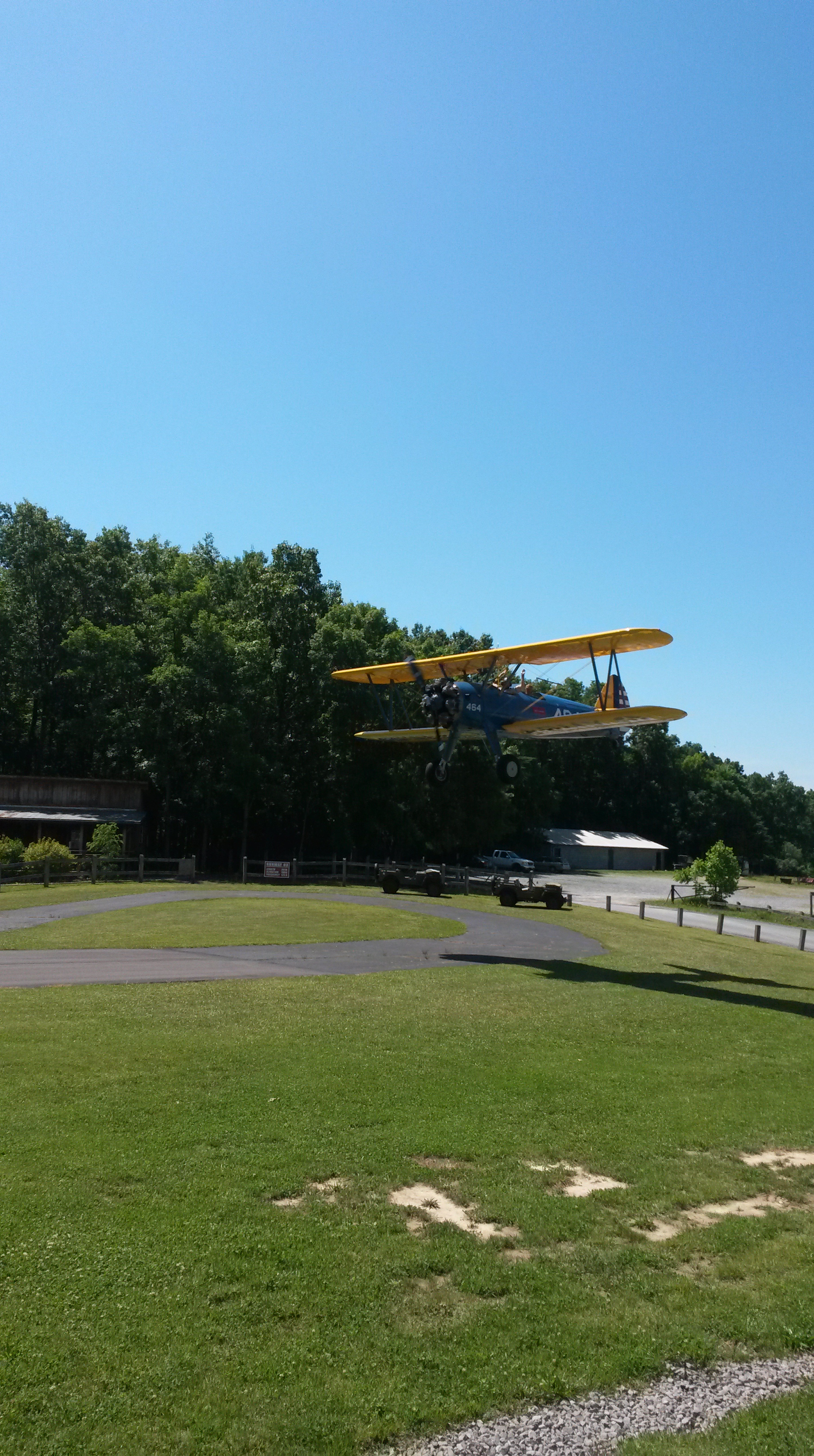
Flew a Stearman. Not just rode in it, mind you, I flew that sucker. With what looked like a hefty butter churn for a control stick, it was incredibly well-balanced and responsive (especially compared to the mushy Cessnas and Pipers I cut my teeth on). One should expect no less from a bird that took grand champion at Oshkosh, beechez.
Went whitewater rafting with the family through the New River Gorge. Highly recommended.
Spent a lovely afternoon and evening boating on a stunning mountain lake. More than two hundred feet deep in spots and surrounded by Appalachian cliffs, it’s the clearest inland water I’ve ever seen. Interesting side note: the dam which formed the lake would’ve normally been named for the town it was situated nearest, which in this case was Gad, WV. But since the locals didn’t care for naming their new landmark “Gad Dam,” they were content with letting the Corps of Engineers slide up the map and pick the next town in line, Summersville.
Again, all highly recommended. We’ve traveled through West Virginia countless times but this was our first visit as a destination, and our first real family vacation in far too long.
By now you’re probably wondering (at least I hope you are), “that’s nice, but when’s the next book coming out, slacker?”
Funny you should ask. Or that I should presume you’re asking. Whatev.
I’ll be blunt: the Perigee sequel is on hiatus because it’s a hot mess. It has the seeds of awesomeness, but the words just aren’t flowing like they should be. At this point, I’m just flailing around within the story instead of it carrying me along. A good story does that: even when you’re the one writing, it’ll surprise you. Bottom line is if I’m not happy with it, you guys certainly won’t be. Just know that it’s not dead, it’s resting.
This doesn’t mean I’m sitting idly about with a broomstick between my knees pretending it’s that gorgeous Stearman (here’s the WWI flying ace on dawn patrol, searching for the Red Baron). People often ask (not necessarily of me, but I’m sure they ask it of somebody), “where do your ideas come from?”
The answer is, they just happen. It’s the curse of a too-vivid imagination. Bottom line is I write because it’s the only way to make the voices in my head shut up. Sometimes the ideas hit you so powerfully that you have to drop whatever you’re doing and write it all down before they fly back to whatever mental crevice they came from.
Happily enough, that happened a few weeks ago. The story concept had formed much earlier, but I couldn’t think of a compelling way to connect the dots and close the circle, so to speak. It was just an idea…a really freaking cool one, but still just an idea. Without a “why should we care?” ribbon to tie the whole package together, it wouldn’t matter.
Until one day last month as I was driving home from work…it seems like the best ideas either come while I’m driving or sleeping. Either way, inconvenient. But the missing why should we care element, the keystone, all of a sudden exploded in my head. It was so compelling that I had to find a place to pull over and write it all down. After scribbling several pages, the story arc blew me away. I hadn’t been this excited about something in a long time, so when I got home I opened up a new file and banged out the first chapter that night.
It’s been like that ever since. At the rate it’s going, it’ll be a readable draft in a matter of weeks. The working title is Frozen Orbit, and I think ya’ll are gonna like this one. It’s straight-up science fiction (grounded in the present) and hopefully like nothing anyone’s done before. And I promise you won’t realize that until the end; not if I do my job right.
The idea came from a couple of “what if” questions (as all good stories ought to); one clearly fantasy, the other philosophical. I’ll share the fantasy one and keep the philosophy to myself, as this is a spoiler-free zone.
This time next year, a piano-sized probe called New Horizons will fly by Pluto on its way to the Kuiper Belt (which is where a lot of comets are thought to come from). How the mission came to be is interesting enough; there was a time crunch that not many people appreciate. Because of its eccentric orbit, it’s believed that Pluto’s thin atmosphere will freeze and collapse around the planet* within the next few years. Once that happens, it’ll remain that way for the next two hundred years. So you can understand the urgency: this will be our first opportunity to get close-up, high-def imagery of the tiny planet and our only opportunity for about ten generations to study its atmosphere.
The pictures alone will be enormously interesting. If you’re old enough to remember the first close-ups of the gas giants and outer planets from Voyagers 1 & 2, this will be our chance to relive that excitement.
What might make that even more interesting? What if New Horizons spies something that shouldn’t be there? Perhaps something artificial, hiding in orbit among Pluto’s tiny moons?
Cool as that idea may sound, it’s not even the one that blew up in my head and made me pull over and hack off all those drivers behind me last month. That one’s saved for the book.
*At least it was a planet when they launched the probe. Still is, far as I’m concerned.
Haven’t done this in a while, but this is my last week on Kindle Select before I put it back up on Barnes&Noble, iTunes and Kobo.
It’s been a long time since I tried goosing sales like this as KDP Free days don’t have the Oomph they used to, unless it pushes you into the Top 100. So yeah, let’s do that.
The sequel is very close to being done, or at least it’s past the “vomit draft” stage and is turning into something coherent and readable. If you haven’t read Perigee yet, this is the opportunity you’ve been waiting for. If you know people who might like it, then bring ’em to the party.
Last night I had cobbled together a lot of interesting stuff about today’s cosmic near-miss with asteroid 2012 DA14 (a pretty innocuous – even boring – name for something that had the potential to do so much damage). I know the professional astronomers have to catalog this stuff in ways that make sense to them, but something passing inside the orbits of our own weather satellites that’s big enough to flatten a large city should have a more impressive calling card. Like Zul the Destroyer. Or Hoss.
An early riser by habit, Arthur Hammond was still surprised to have a call from the control center this soon. If the phone rang at all during the night, it was never welcome news. Otherwise, the flight directors tried to leave the Chairman alone after hours. Not that Hammond ever really shut himself off: a tablet tucked away in his corner study was continuously linked to their network with a full timeline of current flights scrolling across its screen.
“Hammond,” he answered, even more gruffly than he felt.
“Good – you’re up,” he heard Audrey say before a brief pause. “Arthur, I’m calling to report an overdue liner. Armstrong entered farside blackout at 1142 Zulu, expected re-acquisition at 1213Z did not occur. We have no comm or telemetry.”
A sickness filled his gut. Hammond settled gingerly back onto the bed with a pained sigh. It took some time to collect himself before replying. “Understand, Aud. No emergency signals, either?” he asked hopefully. “No transponder squawks?”
“None, and we’ve already pinged the relay sats,” she added. “They’re working. The systems controllers have called in help and they’re poring over the telemetry records up through Loss of Signal. We’re looking for any anomalies that could explain this, but so far no weirdness.”
“But right now, you’ve got a hole in space where our ship should be.”
He could sense her brief hesitation. “That’s correct. I’m declaring this a missing vessel.”
Hammond sighed again. Damn. “Then I concur. Notify the Feds and I’ll activate the rest of the emergency response protocols for you.”
“Thanks Arthur.” It would save her a tremendous amount of distracting work. “I’m also going to make some calls to our buddies back in Houston – at least the ones who’ll still talk to us,” she offered. “Maybe they can do a LIDAR sweep and get a return signal.”
“Good thinking,” he said. A laser-ranging scan worked much like radar, but was more precise and far more useful in space. “We’re not going to just sit on our thumbs and let this play out.”
“Way ahead of you. I’m having the schedulers call in Penny and Charlie, and the flight planners are working out return trajectories for the other liner.”
“What’s your plan, Audrey?” he asked, suspecting he already knew the answer.
“Let you know as soon as I come up with one, boss.”
* * *
Joe Stratton groaned as he stretched for the phone on their nightstand, especially once he noticed the time. Four-something in the blasted morning – which meant he didn’t need to bother checking the caller ID. He lifted the handset from its receiver and tossed it onto his wife’s stomach, waking her with a jolt. “We really need to move that thing to your side of the bed.”
Penny Stratton sat up with a start, acting more awake than she really was, and lightly punched her husband on the arm. “Wuss,” she chided him, and switched to a coolly professional tone as she thumbed the phone. “Go ahead,” she answered crisply, sounding more awake than she actually felt. It wouldn’t do for the company’s Chief Pilot to sound groggy, no matter what time the calls came. It was frequently when normal people were sleeping.
Joe watched through one sleepy eye as her demeanor changed within seconds. Rubbing one eye as she listened, whatever it was brought her unpleasantly awake. “Missing?” she nearly barked into the phone, then caught herself. Penny closed her eyes and leaned back against the pillow, massaging her temples with her free hand. “How long since loss of signal?” she asked. Whatever the answer, she clearly didn’t like it. “Have you called Grant yet? Okay…I’m on my way,” she said, and set the phone on the bed.
He watched her lay still for a minute, lost in thought – maybe praying? Her robotic twirling and tugging at a strand of hair signaled that his wife was deeply troubled.
Penny finally sat back up and walked into their bathroom without a word. He saw the light flicker on and heard rushing water from the shower, which lasted barely a minute. She stepped out shortly after dressed in a uniform jumpsuit with her emergency “go bag” slung over one shoulder: a 55-liter backpack filled with the essentials she’d need for a short-notice trip to unpredictable locations. She gave Joe an apologetic look which told him more than words could: this was really bad, and he shouldn’t expect to see her for a few days.
He lifted a curtain to peek outside. An early spring snowfall had begun while they were asleep. “I’ll put some coffee on,” he said, and headed for the kitchen.
* * *
“So that’s the last signal?” Charlie Grant asked as he leaned over Audrey’s shoulder. Typically one of the first to arrive each day, the director of operations had already been on his way in she’d called him. Her control team had just moved into the Emergency Operations Center; Audrey was waiting to ensure they’d been able to transfer all of the necessary control data over the network before logging them out. In the EOC, they’d be effectively isolated until this crisis had played itself out.
She tapped the time stamp, 1142 Universal. “That’s it,” Audrey said. “The guys think they can tweak some residual data out of the static. We’ll keep scrubbing it after they’re switched on in there, but there’s just not much signal to process. Maybe ten seconds worth. ”
Grant understood. “Don’t I know it,” he finally grumbled. Once the ship’s antennas were physically masked by the Moon’s far side, there was no way to communicate with it. A deal they had reached with NASA to lease bandwidth from a relay satellite already in lunar orbit had been inexplicably canceled just a few months earlier, with no reason was given other than an abrupt “needs of the government” excuse. He and Audrey had both realized they should have known better – the cruel irony was that after this episode, that same government was likely to require uninterrupted contact for any future trips.
“Art’s going to have to get our own comsat up sooner,” Audrey observed. “No matter how this turns out.”
“Can’t rush that sort of thing,” Hammond said as he walked up, startling them both. Penny trailed close behind him, brushing snow from her hair. “It takes what it takes. Same reason you can’t get nine women pregnant and have a baby in a month.”
“Sorry, Arthur…” Audrey began.
“Don’t worry yourself,” he said, though visibly frustrated. “Nobody’s more pissed off about that than me. We have a missing ship which would be a whole hell of a lot easier to find if NASA could’ve spared some bandwidth.”
“Might never have lost it in the first place,” Grant suggested darkly. “We don’t even have enough data to put together a half-assed TLE.” A Two-Line Element held all of the mathematical variables they needed to model the ship’s orbit and predict where it would appear at any time in the future. Without it, they were essentially stabbing in the dark.
“I’ve got a couple swags at their next position out of blackout,” Audrey offered, leaning away from her console and reaching for a notebook. “That’s making some assumptions about what happened, of course.”
“And those would be…?” Hammond prodded.
Audrey returned to her keyboard, tapped in a command, and the main screen changed to display the moon overlaid by different colored ellipses. “To narrow the search pattern, I considered three scenarios,” she explained. “All assume a total comm failure. First, they couldn’t execute the second correction burn and ended up in a long ellipse. Second, they completed the burns but somehow lost power and are exactly where they should be. We just can’t see them.”
“And the third?” Penny was almost afraid to ask.
Audrey had hoped she’d not have to elaborate on that one. “Worst case,” she said, taking a breath, “they burned too long and crashed into the surface on the far side.”
“Pick you poison, as they say,” Hammond replied dourly. “So you’re really only working with two viable scenarios.”
“That’s just the boundaries,” she tried to clarify. “We’re including every likely variation in between. I figured a half-hour difference between orbital periods, starting with each of the two ellipses. We’ll keep working our way in on each expected pass.”
Penny rubbed her eyes and looked at the open workstation behind them when something caught her attention. “When’s the next AOS window?” she asked, staring intently at the monitor.
Audrey checked her watch. “Eight seconds ago, actually,” she said, slightly embarrassed. “While we were talking about it.”
Penny stepped aside and motioned them toward the screen. “Then I think we’ve got something.”
A wildly oscillating pattern had burst onto the comm window. The others scrambled over to where she stood, while Audrey whipped back around to her own station and hurriedly clipped a headset back onto her glasses.
Hammond stayed by her side. “Can you talk to them?” he asked anxiously.
“Not yet,” Audrey said. “It’s on the HF, single-sideband. It’s like they’ve got a stuck mic or something.”
“So it’s not on the emergency freq,” he wondered. “And you haven’t heard this before?”
“Negative. This is new.” As she said it, the static abruptly ended. Crestfallen, Hammond turned away quietly and cursed under his breath.
And then it started again. He rushed back to Audrey’s console as more static crackled over the speakers. Just as suddenly, it cut off. “Don’t lose it!” he barked as Audrey tried to fine-tune the receiver.
The signal returned, was once again briefly interrupted, then resumed. Audrey lifted her hands to demonstrate it had nothing to do with her actions.
“So was this just a comm failure?” Hammond asked hopefully.
Grant and Audrey didn’t appear convinced. “I don’t think so,” he finally answered for them both. “Not given where the signal’s coming from – the orbit’s out of phase. There’s definitely something else going on here.” We never get that lucky, he didn’t want to add.
Penny had been sitting with a spare headset snugged down tightly over her ears. “You’re right about that,” she finally said, pushing back an earphone. “There’s a pattern here – listen.” She then gestured to Audrey, who turned up the speaker volume. “Hear that? There’s a pattern,” she repeated, and checked the intermittent bursts against her watch.
She looked up to a room full of blank stares. “Come on. Nobody here remembers Morse code?”
They’d caught the last transmission in mid-burst, but suddenly understood: three distinct long static bursts, followed by brief silence and three more short bursts. This was followed by a longer silence, seconds that felt like an eternity. And then the pattern repeated itself: three short, three long, three short.
Grant tried to suppress his excitement, not wanting to grasp for what could be false hope. “Is that what I think it is?”
“Damned if I can think of anything else,” Penny said. They all leaned in closer, not quite believing their ears as the pattern repeated once more:
As promised, here’s the next round of Apogee sneak previews.
If ya’ll haven’t guessed, we pick up where Perigee left off: that is, with Art Hammond hell-bent on sending people around the Moon. The tech combines elements of Buzz Aldrin’s “lunar cycler” concept, Bigelow/Transhab type inflatable modules, L2 depots, and a few other things that I’ll try and surprise you with. The “LV” prefix before a ship’s name stands for “Lunar Vessel”, something I made up.
Hints and Spoiler Alerts: Remember that Ryan and Penny were both ex-military? That’s going to come back and bite them.
The excerpts posted here are from the first round of revisions. Details may change along the way, but the story arc and all that goes with it will not. Enjoy!
UPDATE: speaking of details…interesting how seeing something you’ve been looking at for months suddenly changes when you post it somewhere in a different format. There were some things about this first chapter that bugged me, so I’ve done a little editing. I think this flows a lot more nicely, hopefully you will too. Continue reading “APOGEE, Chapter 1”
 Yes, I’m finally confident enough that it’s ready to throw a date out there: Oct. 1st. A surge of pre-orders on Amazon obviously helps sales after release day, so please consider hitting that button.


 As promised, here’s the next round of Apogee sneak previews.
 The Chiles Files