Rev. Peyton’s Big Damn Band:
Not recommended for child care, however.

It's not rocket science
Rev. Peyton’s Big Damn Band:
Not recommended for child care, however.
Everybody else blogs about their music now and then, so I might as well get into the act.
There’s not much modern music (how about that alliteration?) that I care for, a sure sign that I’m getting old. Either that, or it really is all crap. And since you can’t spell CRAP without RAP, I’m inclined to think it’s the latter. A couple of notable exceptions to this era’s parade of suck are the Foo Fighters and Volbeat. Everybody knows the Foos, but if you haven’t heard Volbeat then do yourself a favor and check out their awesome metalbilly mashup of Johnny Cash and Metallica.
Of course, none can match the awesome power of Led Zeppelin (even though my wife thinks the young Robert Plant sounded like someone strangling a cat). It didn’t stop her from getting me their live reunion DVD for Christmas, though. Behold the awesome:
And finally, if you want metal, HERE’S metal: Compressorhead! Heavy Metal by musicians who should know a thing or two about, well, metal. Check out General Grievous’ cousin on drums:
Kind of creepy, really. All we have left is to wait for Skynet to become self-aware and send the Terminators.
I think not. J.J. Abrams, call your office:


Right down to the title font!
Just sayin’…
Once again, not much time for anything else so ya’ll line up at the trough…
Rand Simberg weighs in on the likelihood of Golden Spike’s commercial lunar missions. From someone who knows of which he speaks.
Aerospace companies at increasing risk of industrial sabotage from the Chinese. Don’t say I didn’t warn you!
Following that train of thought: European research into hypersonic suborbital airliners. Well, a guy can dream, but this looks like more EU BS. Studies are fine; research is necessary. But why pretend like they’re ever going to get serious about actually building something?
And for something more down to earth: Airline veteran turns the tables on obnoxious passengers. Takes two to tango.
End of the world watch: “QE3: This Time, It’s Personal!”: Stepping on the accelerator as we head over the cliff. Apparently the old “I can’t be broke, I still have checks!” line is a joke to some and a guiding philosophy for others. I don’t really care what your politics are, just know that this will not end well unless we can somehow grow the economy at a rate that will eventually surpass the Fed’s money-printing velocity. And let’s face it, pro-growth policies are not exactly flowing out of Washington these days. Our only real hope is the domestic energy boom underway in the Appalachians and Dakotas, which so far are not hamstrung by a need to access Federal land. If the EPA can be kept from strangling that baby in the crib, we may have a fighting chance. Better hope so, because otherwise an inflection point is coming and reality will not be denied for much longer.
What’s really infuriating about all this political theater is that those of us who’ve tried to learn History’s lessons are going to suffer from the foolishness of those who refuse to (or believe they’re smarter than their forebears). In the end, human nature is what it is. There is nothing new under the sun.
Since I’m in the middle of a big push to finish Terminal Velocity, there won’t be a whole lot of blog pontificating going on here for the next several weeks. Sorry, but there’s only so much time in the day.
To fill the void, I’ll be posting links to stories that catch my interest. Hopefully they’ll catch yours as well. If something really interesting happens, I might even comment on it (surely the suspense is killing you).
I can hear it now: “Nope, it’s not killing me, and don’t call me Shirley.”
So here’s what’s going on in our world today…
Giant killer asteroids to barely miss Earth tonight. Sleep well, kiddies.
Robert Ballard finds evidence of Noah’s Flood. In case you ever thought wayward asteroids were our only problem.
Elon Musk on Mars and Interstellar travel. Nope, he’s not building a warp drive anytime soon.
Michigan becomes a right-to-work state, predictable hilarity violence ensues. Seriously? If your little club is so friggin’ awesome, why do you need the force of law to retain dues-paying members? Welcome to the free market, beeches.
Behind the yoke of Boeing’s new 787 Dreamliner. Yeah, I’d take one.
Why going to the trouble of hiking and camping is worth it. Because nature rocks.
How little we really know about dinosaurs. And by extension, our own world. What might we imagine present-day animals to be if they had to be reconstructed from the same available fossil record? Hint: tree-climbing goats. But no sharks with frickin’ lasers…again.
Wrath of Khan character officially revealed for Star Trek Into Darkness! Sadly, it’s not the one we’re all hoping for. Yet.

P.S. And if you’re looking for some good holiday reading, Perigee is only 99 cents this week!
Reaction Engines in the UK seems to be excited about something:
The Biggest Breakthrough in Propulsion Since The Jet Engine
Can you tell they might think this is a big deal? I for one hope they’re not exaggerating because this does have the potential to be a generational leap in engine technology.
If their pre-coolers can be made to work outside the lab, then the concept of airbreathing rockets (or rocket-based combined cycle, RBCC) isn’t so farfetched anymore. And cooling a fast-moving mass of air by over 1,000°C in a hundredth of a second ain’t no small potatoes.
Take a look at this cutaway view of their SABRE engine: the heat exchangers are those baffled rings between the inlet spike in front and the compressor in the middle. It’s meant to function like the intake of a normal jet engine – but at hypersonic speeds, temperature becomes more limiting than just about anything else (presumably the inlet spikes are managing the shock waves that are just itching to bounce around inside that engine while it’s moving through the air at Ludicrous Speed).
So anyways, air tends to get kind of hot when it’s being pushed and squeezed at high velocities. And when air gets really hot, jet intakes tend to not work very well. That was a big reason the SR-71 was limited to around Mach 3.5 (or so they say). For a combined-cycle engine, precoolers are pretty much ball game.

A functioning SABRE engine would enable the kind of suborbital spaceplanes that I wrote about in Perigee. In fact, Reaction’s ideas were used extensively in my mental world-building while the story took shape. I’m a big believer in the potential for suborbital point-to-point airline service – if you’d be willing to spend a quarter-mil for a 30 minute joyride on Virgin Galactic, wouldn’t you spend that much to actually go somewhere?
Yes, I’m kind of excited about this. Could it eventually lead to a single-stage-to-orbit spaceplane like they propose with Skylon? Maybe. The energy needed to make orbit is exponentially greater than that needed for a 6,000 mile hop at Mach 10.

So my answer would be, “beats me, ask a real engineer.” I just play one at work. But hanging those heavy engines out on the ends of the wing strikes me as not being a real good idea. Any twisting moments (which will happen in atmospheric flight) would just be amplified. Which means beefier wing structure, which adds weight, which increases minimum runway, which also requires more power from the engines, etc…this is the kind of circular reasoning that is otherwise known as a “trade study.” Every decision about one aspect of a system’s design affects all sorts of other stuff in the system. This is especially true in aeronautics.
But perhaps the biggest hurdle to overcome (in my view) is the apparent operating assumption that a passenger-carrying version of Skylon wouldn’t have a pilot aboard. They’d just pop in a passenger cabin, program the airplane, and send it on its way. There has been a tremendous amount of progress in the UAV world, but I have a hard time seeing how people would pay big money for an inherently risky ride with nobody up in the front office to deal with stuff when it all goes sideways. I have an even harder time seeing how FAA or EASA would ever certify such a bird to carry passengers (and that’s coming eventually, we can be certain). Unexpected bad stuff will happen, you can bet on it: flying is hours of boredom interrupted by moments of sheer terror. Thus shall it ever be.
11/30 UPDATE: io9 has more, but it sounds like they’re confusing Skylon with another Reaction proposal called LAPCAT.
12/01 UPDATE: Wired is on the case as well.

Maybe Elon Musk isn’t thinking big enough?
A few months ago, physicist Harold White stunned the aeronautics world when he announced that he and his team at NASA had begun work on the development of a faster-than-light warp drive. His proposed design, an ingenious re-imagining of an Alcubierre Drive, may eventually result in an engine that can transport a spacecraft to the nearest star in a matter of weeks — and all without violating Einstein’s law of relativity.
I’ve heard about this kind of research off-and-on for some time, and have to admit I thought it was nuts. But if it’s actually within reach of current technology (namely, enough energy to power such a thing) then, yeah. That’s the sort of out-there R&D that NASA ought to be working on, because new technology pretty much always starts with a lab experiment:
What White is waiting for is existence of proof — what he’s calling a “Chicago Pile” moment — a reference to a great practical example.
“In late 1942, humanity activated the first nuclear reactor in Chicago generating a whopping half Watt — not enough to power a light bulb,” he said. “However, just under one year later, we activated a ~4MW reactor which is enough to power a small town. Existence proof is important.”
Once the underlying science is understood, it becomes an engineering problem. And that’s where the really cool stuff gets done.

11/29 UPDATE: Warp Drive goes all respectable-like in the Atlantic Monthly.

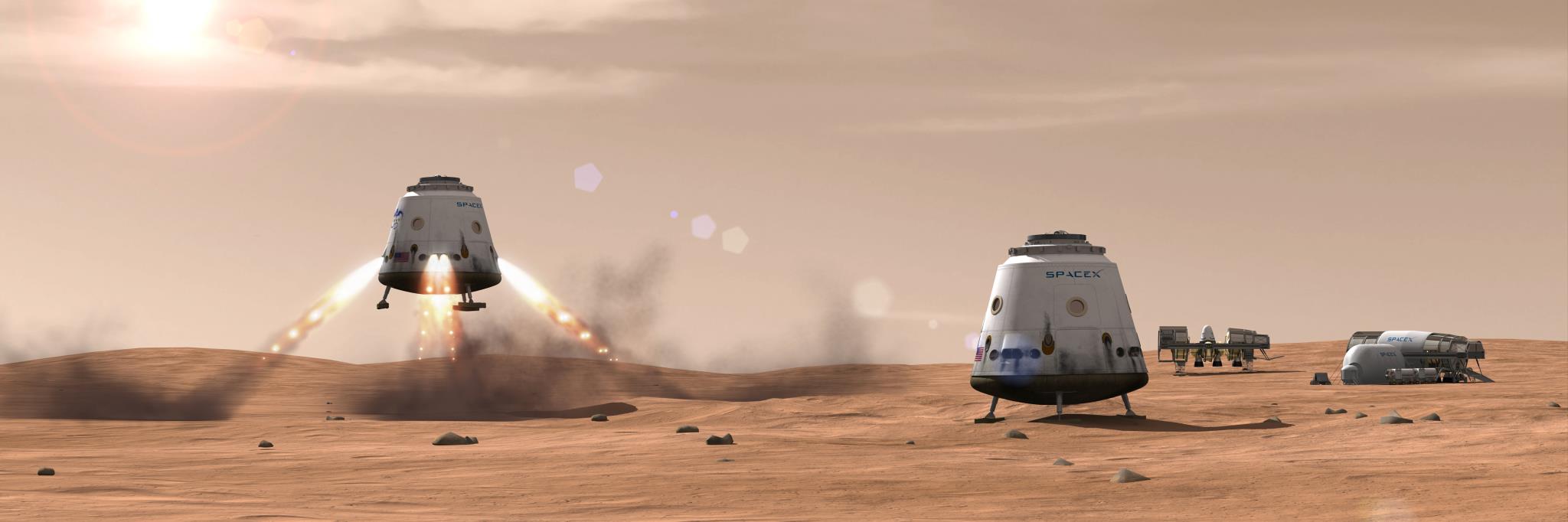
Elon Musk is serious about going to Mars:
Musk’s $500,000 ticket price for a Mars trip was derived from what he thinks is affordable.
“The ticket price needs to be low enough that most people in advanced countries, in their mid-forties or something like that, could put together enough money to make the trip,” he said, comparing the purchase to buying a house in California. [Photos: The First Space Tourists]
He also estimated that of the eight billion humans that will be living on Earth by the time the colony is possible, perhaps one in 100,000 would be prepared to go. That equates to potentially 80,000 migrants.
Musk figures the colony program — which he wants to be a collaboration between government and private enterprise — would end up costing about $36 billion. He arrived at that number by estimating that a colony that costs 0.25 percent or 0.5 percent of a nation’s gross domestic product (GDP) would be considered acceptable.
The United States’ GDP in 2010 was $14.5 trillion; 0.25 percent of $14.5 trillion is $36 billion. If all 80,000 colonists paid $500,000 per seat for their Mars trip, $40 billion would be raised.
“Some money has to be spent on establishing a base on Mars. It’s about getting the basic fundamentals in place,” Musk said. “That was true of the English colonies [in the Americas]; it took a significant expense to get things started. But once there are regular Mars flights, you can get the cost down to half a million dollars for someone to move to Mars. Then I think there are enough people who would buy that to have it be a reasonable business case.”
Here’s a link to his full interview with the Royal Aeronautical Society (H/T Clark Lindsey’s NewSpace Watch). This bit is also interesting:
Musk also ruled out SpaceX’s Dragon capsule, which the company is developing to ferry astronauts to and from low-Earth orbit, as the spacecraft that would land colonists on the Red Planet. When asked by SPACE.com what vehicle
would be used, he said, “I think you just land the entire thing.”
Asked if the “entire thing” is the huge new reusable rocket — which is rumored to bear the acronymic name MCT, short for Mass Cargo Transport or Mars Colony Transport — Musk said, “Maybe.”
Not sure why you’d want to land the whole thing on Mars, unless the booster can be used again for departure. That’s a bit of a departure from their earlier concepts, in which Dragon was designed as a true multi-purpose vehicle, up to and including Earth re-entry at Mars return velocities.
And did anyone else notice the MCT speculation? Hmm…
MCT = Mars Crew Transport
Wired recently interviewed Elon Musk about why he founded SpaceX and his long-term goal of settling Mars:
Anderson: And Dragon, the spacecraft you berthed with the ISS in May, has features that might eventually prepare it for a manned Mars mission.
Musk: Eventually, yes. The thrusters on Dragon are sized so they’ll be able to do launch escape—which means being able to move away from the rocket at a force of approximately 6 g’s. That same thrust level happens to be kind of a good number for supersonic retro-propulsion for landing on Mars.
There’s also a lot of myth debunking and bubble-bursting contained within, particularly in regards to the conventional wisdom on rocket construction and launch economics. But wait, there’s more!
Musk: Version two of Dragon, which should be ready in three years, should be able to do it. But really, if humanity is to become multi-planetary, the fundamental breakthrough that needs to occur in rocketry is a rapidly and completely reusable rocket. In the absence of that, space transportation will remain two orders of magnitude more expensive than it should be…
…I’d like to emphasize this is an aspiration for SpaceX—I’m not saying that we will do it. But I believe it can be done. And I believe that achieving it would be on a par with what the Wright brothers did. It’s the fundamental thing that’s necessary for humanity to become a space-faring civilization. America would never have been colonized if ships weren’t reusable.
By all means read the whole thing.
Coincidentally, here’s the recent hover flight of their Falcon 1-based “Grasshopper” booster.

H/T: Clark Lindsey at NewSpaceWatch

As if manned space capsules and reusable boosters weren’t enough…but what is “MCT”? Some tantalizing bits from Flight Global:
Musk said the new rocket, which he calls MCT, will be “several times” as powerful as the 1 Merlin series, and won’t use Merlin’s RP-1 fuel. Beyond adding that it will have “a very big core size”, he declined to elaborate, promising more details in “between one and three years”.
Musk declined to say what ‘MCT’ stands for, and declined to answer further questions on the project.
During an April interview, SpaceX president Gwynne Shotwell discussed a project with similar characteristics, describing engines with “more than 1.5 million pounds” of thrust.
That would be equivalent to the behemoth F-1. With multiple engines arranged in a booster core 21 meters in diameter, that’s a bigger vehicle than the Saturn V.
Now for the really important part:
Shotwell said a possible payload range of the new rocket is 150-200t to low Earth orbit (LEO). A vehicle of that size would easily eclipse NASA‘s proposed Space Launch System, which will eventually be capable of launching 130t to LEO, making SpaceX’s potential vehicle the most capable ever built by a wide margin.
Note the low side of that estimate is 150 metric tons to LEO, compared to the Saturn’s throw weight of a shade less than 130mt. I’m excluding SLS because it will probably never evolve beyond vaporware.
Ho-lee crap. So, connecting the dots, SpaceX is developing a heavy booster that will be bigger and more capable than a Saturn V. Given their track record so far, I’ve no reason to doubt their success. Mr. Musk has hinted at this in the past, noting that Falcon 9-Heavy would not be the end of the line for them. Considering his oft-stated long term goals, I’ll risk future embarrassment and take a guess at what “MCT” might stand for:
Mars Crew Transport.
You heard it here first.
 The Chiles Files