When is a secret spaceplane not a secret spaceplane? When we know about it ahead of time:
Next month, the X-37B will blast off again aboard an Atlas 5 rocket from Cape Canaveral Air Force Station in Florida. The exact timing of the October launch is unknown and subject to change due to weather conditions, and there’s no telling how long the drone will stay in orbit. ”Preparations for launch at Cape Canaveral have begun,” Major Tracy Bunko, an Air Force spokesperson, told Space.com.
It’s funny how the sci/tech blogs get all twitterpated over this thing. X-37 was a NASA program that got money-whacked (like pretty much every other NASA project), and the Air Force wisely took it over. It fit the bill for a lot of capabilities they’d been wanting to develop anyway, so it’s not like they’ve reverse-engineered the Klingon cloaking device or something.
Which would probably be a bad thing, since they stole it from the Romulans to begin with. We’d be much better off just building our own cloaking device from scratch…
Obama caught a lot of grief from conservatives over the decision to end the space shuttle program, when in reality this decision was made (correctly) by George W. Bush in 2007. Once enacted, it couldn’t be easily undone – supply chains and tooling were pretty much gone no matter what the Big O might have wanted.
The difference is that W had also directed NASA to develop a cheaper manned space capability that was supposed to be flying, well, this year.
Not seeing anything out there that looks like a new NASA vehicle? Nope, me neither. And that’s where the criticism comes from: along with the shuttles, Obama deep-sixed Constellation, which was Bush’s follow-on program. More accurately, it was the hobby horse of Bush’s NASA Administrator Mike Griffin – who literally wrote the book on spacecraft design – and was described as “Apollo on steroids.”
Which it was, sadly. Though a stupendous achievement and a source of great national pride to this day, Apollo was also a money sink that corrupted the thinking of an entire generation as to “how we do space.”
Constellation was deeply flawed and could only be fixed with a money injection that simply wasn’t going to happen. An independent review board composed of former aerospace execs and NASA astronauts determined that even if the whole program was dropped in their laps, fully developed and ready to go, that they still couldn’t afford to operate it. And in the meantime, Griffin was still diverting funding from other programs within the agency to prop up his personal favorite.
So yes, Obama was right to can it. He was also right to direct NASA to contract out their access to low-Earth orbit. In other words, as I’ve always preached: getting to and from orbit is well enough understood that it’s past time to let the private sector take over (while driving costs down, to boot). Let NASA save that money to buy rides into low orbit so they can develop the technology to routinely go beyond it. Maybe one day I’ll be able to afford a ticket. Maybe not. But it was never going to happen by doing it the NASA way.
Others have surmised the Prez did it because he doesn’t understand either spaceflight (most pols don’t) or the private sector (too many pols don’t; he’s just the worst example). It’s really the only substantially pro-free market decision he’s made, so “why” doesn’t really matter. It was the right call and he deserves credit for it.
Credit: NASA
So it pains me to see ostensibly “conservative” politicians trying to tar him with it – because if Obama’s for it, they’re agin’ it I suppose. While stubbornly refusing to accept the likes of SpaceX or Blue Origin, they still insist on throwing money down a hole to mandate that NASA build another big-@$$ rocket. While a new Saturn V-class launcher would be cool as heck to see, we don’t really need it. It would make a lot more sense to use smaller Atlas and Delta heavies with more launches and develop some kind of propellant depot capability in orbit. Given our experience in orbital rendezvous and construction, it’s hard to see how that’s not doable.
Fortunately, there are voices of reason on the (R) side who see things as they are. Here’s Dana Rorabacher (R-CA):
The bottom line is, in order to have steady funding, we’re going to have to defund every other space project that we have! Nobody here wants to face that! Maybe if we’re going to provide safety, maybe if we’re going to provide reliability and do this professionally, maybe we should set our goals to something we can actually accomplish within the budgets that are possible, without destroying every other aspect of the space program. I think that’s what’s happening here today. That’s what we’re really discussing.
I’m pretty sure SpaceX is in his district, so don’t discount the fact that he’s just advocating for the local gentry. That’s what congresscritters do. Fortunately, he’s on the right side of this debate.
In the larger picture, I’ve met a few politicians here & there and am convinced that most of them are just clueless. Maybe 10% are the real thinkers and visionaries, while the rest are followers who parrot the party line. They may more or less believe in their party’s platform, but for the most part are just along for the ride and know how to make people like them.
Interesting goings-on in our night sky recently – check out this amateur video of something big hitting something even bigger: Mysterious Impact Flash on Jupiter.
Now, understand I use the “amateur” term carefully. There’s a huge global network of astronomers out there who do this stuff purely for fun and personal interest. Some of the equipment they have is astounding, and they got mad skillz. Professional astronomers count on these guys for cataloging phenomena that the Big Dogs just can’t devote scope time to: stuff like variable stars, planetary occultations, Martian dust storms, and comets (many of the named comets were discovered by non-professionals).
Apparently that list also includes potential civilization-destroying rogue asteroids.
Yeah, I left the best part for last: from iO9, speculation that perhaps Jupiter took one for the team. There’s been a lot of that lately, come to think of it.
So, are the massive outer planets with their deep gravity wells actually a picket system for the smaller inner planets – namely, the ones that could support life? More specifically, ours?
This is a theory which has been gaining traction over the years. Jupiter, Saturn, Uranus (stop giggling), and Neptune patrol the far reaches of our solar system, sucking in or otherwise diverting species-threatening chunks of rock and ice that otherwise might find themselves on orbits that intersect ours at really inconvenient times. Like, you know, when we’re in the same place.
NEO (Near-Earth Object) detection has been getting more and more attention of late, but an observer’s position on our globe makes a big difference: if you’re in North America, most of the southern sky is permanently out of reach. If you’re in Australia, the problem is reversed. And as I understand it, there isn’t a lot of observing capability in the southern hemisphere. If you look at the distribution of population and land mass, it’s not hard to see why. But the rocks are still out there.
NASA has proposed a manned mission to a NEO using the Orion spacecraft it’s developing, and there are plenty of candidate asteroids out there. I’m all for it if they can afford it. Besides going farther than the Moon, to something humans have never encountered, it’s a good idea to understand these things better so as to be able to deflect or destroy them before one of them eventually gets pitched through the strike zone right into home plate.
So could NASA do it? Sure, if they ever get Orion flying. The whole idea is that it would need less delta-V than a lunar mission and it could be done without a specialized lander – so it’s less of an engineering hurdle and more of a logistics problem. LockMart has already studied this extensively, calling it the “Plymouth Rock” mission.
Could private space do it? Well, ya’ll can probably guess how I feel about that. Once a manned Dragon is ready, I’ll bet SpaceX could put a mission together in short order if they really wanted to.
This is why building routine low-cost access to space is important: it enables us get out there and do something about it. Space travel isn’t easy or inherently safe, but there’s no reason the mechanical aspects of it can’t be made reliable and modular. Which of course is exactly what SpaceX, Bigelow, XCor, Masten, et al., are trying to do.
Think about this: what would you need to put together an asteroid mission?
Well, there’s the transportation up and down: Dragon.
How about a crew habitat and life support? Bigelow Sundancers would be a good start.
Propulsion? I don’t know, maybe existing Centaur kick-stages or whatever that Russian booster Space Adventures is using for their lunar orbit tourist flight.
Get the idea? The basic components either exist or are in development with test articles already flown in orbit. But as they say, the devil’s in the details: radiation shielding being the most obvious. Leaving the protection of the Van Allen belts is a real hazard – the Apollo program didn’t really address it, placing their faith in probability. That is, the missions were of short enough duration that the likelihood of being fried by a Coronal Mass Ejection was acceptably low. But they also recognized that if they kept going, it would eventually happen. A two or three month flight to an asteroid raises the odds significantly.
Which brings us back to my point: none of this is without risk. But nothing worth doing ever is. In the meantime, if you want to get a good idea of the sort of widespread mayhem even a relatively small asteroid or comet could produce, check out this handy little Calculator of Mass Destruction.
And be thankful that our solar system has been blessed with these gas giants which are not only nice to look at, but which protect us from all manner of big space junk.
Neil Armstrong has passed away. He’d not been well, having recently undergone heart surgery.
He was, of course, pretty much at the top of my list of boyhood heroes. And he was certainly the most reclusive of the Apollo veterans, famously avoiding the media spotlight. It’s been speculated that his quiet, taciturn personality was a big reason he landed on the short list of potential first moonwalkers. Continue reading “The Eagle Has Wings”
Ho-lee crap. NASA actually pulled it off. Curiosity, a rover that’s roughly the size of a Mini Cooper, is now safely on Mars and ready to cruise.
This was a real feat – if , like most normal people, you haven’t been paying attention (as opposed to abbie-normal space geeks like me), this wasn’t your average Mars landing. Which proves we’re living in the future: namely, that “average Mars landing” is not a downright laughable turn of phrase.
Anyways, this one was lowered by a hovering rocket-powered robotic sky crane like something from The Terminator. Guess the bubble-wrap air bag technique wasn’t going to work this time.
I’ll post more later, for now here’s some linkage to sites with a lot more information than I have time to gather.
Oh, and did I mention it also has a rocket-blasting laser? Cool points are off the scale.
UPDATE: An overhead shot of Curiosity under parachute, from the Mars Reconnaissance Orbiter. I don’t think you can even measure the cool points anymore…
Despite (or perhaps because of) today’s dreary headlines, I’d be neglecting my space-nerd cred if I didn’t point out that today is the 43rd anniversary of the first moon landing.
I was five, and completely obsessed with the whole program. My grandpa loaded me up with Apollo toys from the Gulf station, including some nifty stuff that came inside Tang jars (the official OJ of the space program). The coolest was this little plastic disc that you’d pop out of the lid and bake in the oven. It came out as a perfectly realized Apollo Command Module.
Yeah, I had a couple dozen of them. Plus models. Plus GI Joe astronauts. Plus books. So it was pretty much a no-brainer for my parents to let me stay up well past bedtime to watch the first moonwalk on TV. And I wasn’t the least bit fooled when my Mom called in from the front porch that she could see them up there on the Moon (unlike my little sister, who fell for it).
She couldn’t fool me. I had a telescope, and therefore knew better. Didn’t stop me from trying later on, though…
Our youngest has always had a fascination with the moon. Not sure why – who can explain such things? But I totally get it. When he was younger, he’d ask me if he could go to the moon when he grows up. I told him I certainly hope so. He said “I’m going to go to that moon, and smoke a cigarette when I get there”.
It’s beyond disappointing that we stopped going and have been mired in low Earth orbit ever since. I don’t want this to just be another vague story my kids hear about from their old man – I want them to see it happen again. I want them to have the chance to go – and to go even farther.
Thankfully, that may be even more likely now than it was just ten years ago. Here’s hoping my son has the chance to light up a cig on the moon one day.
But afterwards, he’d #$%@! well better never touch one of those cancer sticks again.
In the closing notes of Perigee, I mentioned that one of the biggest reasons spaceflight has been so stupendously expensive is the problem of reusability. A big rocket is every bit as expensive and complex as a new airliner, but it all gets thrown away after one flight.
Think you could afford a weekend jaunt to Vegas if Southwest ditched their 737s at the end of every trip? For that matter, could they even afford to do business like that?
The answer, obviously, is a big fat NO.
There are other things at work, namely a bureaucratic legacy that has made it overly complicated to build any launchers for NASA (especially “human rated” ones). Their own internal studies admitted that if SpaceX had developed the Falcon launcher family along the traditional guvmint model, it would’ve increased costs by a factor of 10 or so.
The Air Force’s “evolved expendable launch vehicle” (EELV) program didn’t bring those costs down very much. But they did result in some way-cool rockets than can be used for lots of stuff besides milsats. Here’s a Delta IV-Heavy, which will take NASA’s Orion capsule on its first unmanned test flight next year:
Now for something that combines really big rockets with vertical landing, like something from a 50’s sci-fi movie. Given SpaceX’s success record, I have no doubt they’ll be able to make it happen:
Suborbital hops into space and back not enough of an adrenaline surge? Bored with flying in circles aboard the space station? Clearly, you are a discerning traveler who can be satisfied with nothing less than the most unique experience.
Or maybe you’re just a gold-plated pain in the @$$. If you’ve got the money, it don’t matter.
So how about a trip to the Moon? If that doesn’t light you up, then you must be dead. And please, hold the “no, but I’d be dead by the end of the trip” jokes to yourself, thankyouverymuch.
As with suborbital passenger hops, two companies are vying to offer different variations of the same amazing journey. In this case, each wants to be the first to send paying passengers around the Moon.
IRONY ALERT! Forty-three years after the US won that race, both plan to return by using – wait for it – Russian spacecraft.
Soyuz was originally intended to be the Soviet’s moonship, so it’s not too much of a stretch to think it’s still up to the task after 40 years of production and design improvements. It’ll require a better heat shield, life support, and nav/com, but these likewise have the benefit of 40+ years experience.
First up, let us dispense with what I believe to be the dark horse in this race: Excalibur Almaz. They’ve essentially salvaged 1980’s Russian military space station hardware to spiff up, attach to an Earth-departure booster, and put into lunar orbit. It would be reusable, as would the re-entry vehicles they bought to service it.
Hey, I didn’t make it up – that’s what they said. If they can pull it off, great. The idea of a small space-station-sized passenger vessel that regularly transits between Earth and Moon is a terrific idea. Heck, it might even make for a really good book.
The catch? Ion propulsion. Not only is their trans-lunar injection (TLI) stage based on technology that’s not really off-the-shelf ready yet, the low thrust means a long orbit – like six months round trip. It would actually take its passengers farther away from Earth than any other humans have ever been, according to their own information.
Now I’m all about traveling the scenic routes, but there ain’t that much to see on the way to the moon unless you’re pointed right at the thing. That’s an awfully long time to be cooped up in something the size of a school bus, eating freeze-dried food and inhaling your shipmate’s farts.
And did I mention this experience can all be yours for only $150 million?
Now for the one that I take more seriously: Space Adventures. This is the same outfit that’s arranged for several trips into orbit on Soyuz, including week-long stays at the International Space Station. They’ve long since learned how to suppress the giggle factor amongst the nonbelievers, and seem to have this jaunt planned out fairly well. To my layman’s eyes, it looks like a recreation of the original plans to send a crewed Soyuz into lunar orbit. Considering the price tag and exclusive clientele, they’ve also seen fit to purchase an extra hab module which will go up with the TLI stage. I would imagine it’ll work out to one pax in each module, with the pilot in the other. Which will probably work just fine for a 10-day trip, because this one uses good old-fashioned chemical rockets.
One seat has already been sold, supposedly to filmmaker James Cameron. And if I had that kind of money, I’d be right behind him in the ticket line.
Did I mention someone ought to write a book about this?
It’s been eight long years since SpaceShipOne became the first privately-built spacecraft to actually fly into space, thus earning the title of…spacecraft.
OK, so that’s redundant. My kids have been making me watch too much Austin Powers (allow myself to introduce…myself).
Not being content with making history just once, Rutan and Co. went on to make two more flights with ballast equivalent to two passengers, thus earning the $10 million Ansari X-Prize.
Naturally I was geeked out over the whole thing when it happened. It also gave me the impetus to start writing Perigee, which had already been flitting about inside my cranial region for some time. I figured now that someone had actually done it, and another really rich guy was bankrolling a whole new airline on the concept, that my own wild ideas wouldn’t feel so…science-fictioney.
The SpaceX Dragon has successfully completed its first demonstration mission to the International Space Station.
Wish I had time to opine more, but for now get thee to this here link for pictures and details.
UPDATE:
Here’s a shot of Dragon waiting for its ride home:
“Here there be Dragons” (Via SpaceX)
The significance of this mission cannot be overstated. From my layman’s perspective, it was pretty much flawless – and did I mention this was only the second flight? There’s been a lot of skepticism about the whole Commercial Crew program from politicians and others who are ordinarily pro-free market, but when seeing their NASA cash cow starved, begin to freak out and insist on throwing more money at an agency which has not demonstrated that it can successfully develop a new spacecraft in the past thirty years. Continue reading “Chasing the Dragon”
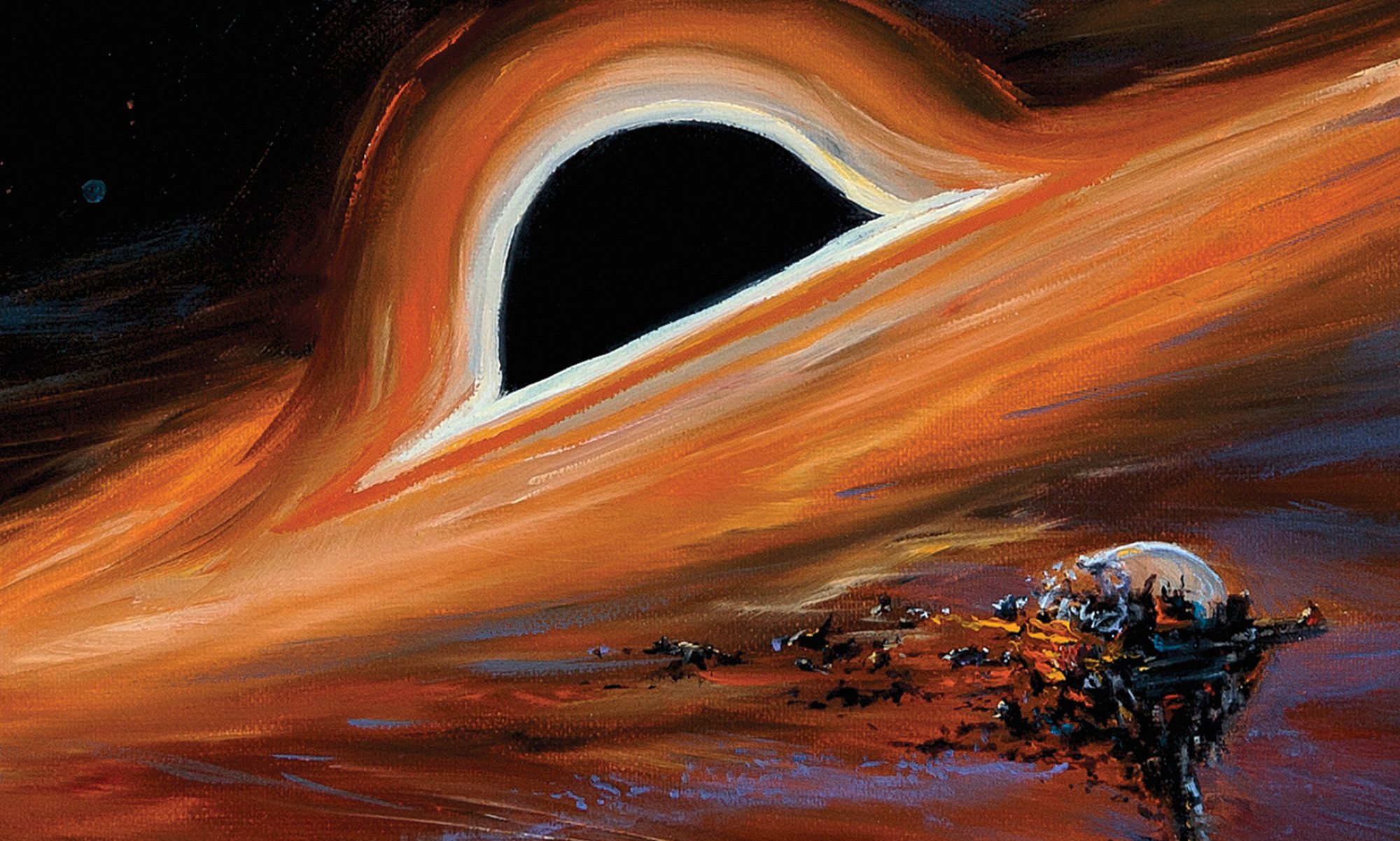

 In which I kinda, sorta, defend the President.

 So could NASA do it? Sure, if they ever get Orion flying. The whole idea is that it would need less delta-V than a lunar mission and it could be done without a specialized lander – so it’s less of an engineering hurdle and more of a logistics problem. LockMart has already studied this extensively, calling it the “Plymouth Rock” mission.
 Neil Armstrong
  Ho-lee crap. NASA actually pulled it off. Curiosity, a rover that’s roughly the size of a Mini Cooper, is now safely on Mars and ready to cruise.

 In the closing notes of Perigee, I mentioned that one of the biggest reasons spaceflight has been so stupendously expensive is the problem of reusability. A big rocket is every bit as expensive and complex as a new airliner, but it all gets thrown away after one flight.


 The Chiles Files